
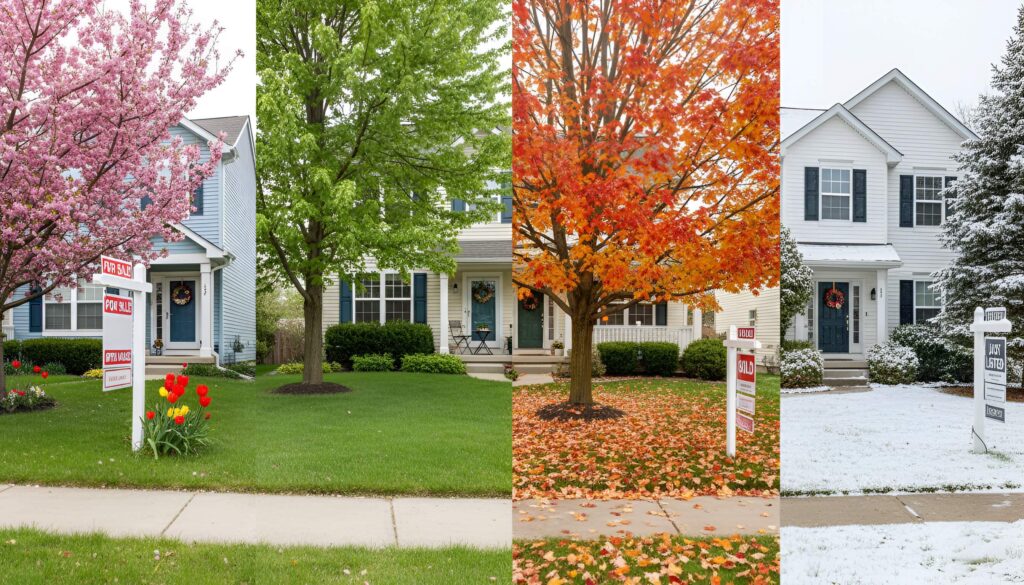
Seasonality plays a powerful role in real estate, influencing everything from buyer demand to pricing strategies and how long a property stays on the market. While location, interest rates, and economic conditions matter, seasonal market trends often determine when homes sell faster, attract higher offers, or linger unsold.
Understanding how different seasons impact home prices and time on market can help buyers, sellers, and investors make smarter, more strategic decisions. In this guide, we’ll explore how seasonal patterns shape the housing market, what homeowners should expect throughout the year, and how to leverage these trends to your advantage.
Understanding Seasonal Trends in the Real Estate Market
Seasonal real estate trends refer to predictable fluctuations in housing activity that occur at different times of the year. These patterns are driven by lifestyle changes, weather conditions, school schedules, and buyer psychology.
While every market is unique, national data consistently shows clear seasonal cycles in home prices, sales volume, and time on market.
Why Seasonality Matters in Real Estate
Seasonality affects real estate because it influences both supply and demand. When more buyers are searching, competition increases, often driving prices higher and reducing days on market. When buyer activity slows, sellers may need to price more competitively or wait longer for offers.
Key factors influencing seasonal trends include:
- Weather conditions and daylight hours
- School calendars and family relocation schedules
- Holiday spending and travel
- Job market cycles and corporate relocation timing
Understanding these drivers helps explain why homes behave differently throughout the year.
How Seasonal Market Trends Affect Home Prices
Home prices don’t rise or fall randomly. They are heavily influenced by when a home is listed and how many buyers are actively searching during that period.
Spring and Early Summer: Peak Pricing Season
Spring is widely considered the strongest season for home prices. As temperatures rise and daylight increases, buyer activity surges.
Why prices tend to be higher in spring and early summer:
- More buyers enter the market after winter
- Families aim to move before the next school year
- Homes show better with blooming landscaping and natural light
- Competition leads to multiple-offer situations
In many markets, sellers listing in spring can command higher prices and stronger terms due to increased demand.
Late Summer: Strong but Stabilizing Prices
Late summer often continues the momentum of spring, but pricing growth may begin to stabilize. Some buyers have already purchased, while others remain active but more selective.
Sellers can still achieve favorable prices, but overpricing becomes riskier as buyer urgency begins to cool.
Fall: Price Adjustments Begin
As fall approaches, home prices often start to level off or experience modest declines. Buyer demand decreases due to school schedules and approaching holidays.
However, fall buyers are often serious and motivated, which can still support fair market pricing for well-prepared homes.
Winter: Lower Prices, Fewer Bidding Wars
Winter typically sees the lowest home prices of the year. With fewer buyers in the market, competition drops, and sellers may offer price reductions or concessions.
For buyers, winter can present opportunities to negotiate better deals, especially in markets with higher inventory.
Seasonal Impact on Time on Market
Time on market refers to how long a home takes to sell after being listed. Seasonal trends significantly influence this metric.
Homes Sell Faster in Spring and Summer
In peak seasons, homes generally spend fewer days on the market due to increased buyer traffic and stronger competition.
Benefits of selling during high-demand seasons include:
- Faster offers
- Higher likelihood of multiple bids
- Reduced need for price reductions
- Stronger negotiation power for sellers
In many markets, well-priced homes in spring can sell within days or weeks.
Longer Time on Market in Fall and Winter
As buyer demand declines, homes tend to stay on the market longer. Reduced foot traffic and fewer showings mean sellers must be patient.
To minimize time on market during slower seasons, sellers often need to:
- Price more competitively
- Improve staging and presentation
- Offer incentives such as closing cost assistance
While winter sales are slower, serious buyers are still active, especially those relocating for work or facing timing constraints.
Best Time to Buy or Sell a Home Based on Seasonal Trends
Understanding seasonal market trends allows both buyers and sellers to align their goals with the most favorable timing.
Best Time to Sell a Home
For most sellers, the optimal time to list is:
- Late winter to early spring for maximum exposure
- Spring for higher prices and faster sales
- Early summer for strong buyer demand
Sellers who prioritize speed and top dollar typically benefit most from spring listings.
Best Time to Buy a Home
Buyers often find advantages during slower seasons:
- Fall offers less competition and more negotiating room
- Winter provides opportunities for lower prices and motivated sellers
- Off-season listings may allow buyers to include contingencies more easily
The best time to buy depends on whether a buyer prioritizes selection or affordability.
How Local Market Conditions Influence Seasonal Trends
While seasonal patterns are consistent nationwide, local market conditions can amplify or soften their impact.
Climate and Geography
In warmer climates, seasonal fluctuations may be less dramatic. In colder regions, winter slowdowns are often more pronounced due to weather challenges.
Inventory Levels
Markets with low inventory may experience less seasonal price variation, as demand remains strong year-round. High-inventory markets often show sharper seasonal price changes.
Economic and Employment Factors
Strong job growth and population increases can override seasonal slowdowns, keeping demand elevated even in traditionally slower months.
Working with a local real estate professional helps interpret how national seasonal trends apply to a specific market.
Strategies to Navigate Seasonal Market Trends Successfully
Tips for Sellers
- List in spring or early summer for maximum exposure
- Price strategically in fall and winter to attract serious buyers
- Enhance curb appeal to offset seasonal challenges
- Be flexible with showings during slower periods
Tips for Buyers
- Shop during off-peak seasons for better negotiation leverage
- Get pre-approved to move quickly in competitive seasons
- Monitor price trends rather than focusing solely on season
- Work with an agent who understands seasonal pricing strategies
Being proactive and informed allows buyers and sellers to take advantage of seasonal opportunities rather than reacting to them.
Frequently Asked Questions About Seasonal Real Estate Trends
1. Do home prices really change by season?
Yes. Home prices tend to be higher in spring and summer due to increased demand and lower in fall and winter when buyer activity slows.
2. What season do homes sell the fastest?
Homes typically sell fastest in spring and early summer when buyer competition is strongest.
3. Is winter a bad time to sell a home?
Not necessarily. While fewer buyers are active, winter buyers are often highly motivated, and competition among sellers is lower.
4. When is the best season to buy a home?
Fall and winter are often the best seasons to buy due to reduced competition and increased negotiation opportunities.
5. Do seasonal trends affect all real estate markets the same way?
No. Climate, inventory, and local economic conditions can significantly influence how seasonal trends impact a specific market.
Turn Seasonal Insights Into Smart Real Estate Decisions
Understanding how seasonal market trends impact home prices and time on market gives you a strategic advantage—whether you’re buying, selling, or investing. Timing your move correctly can mean faster sales, stronger offers, or better deals.
Ready to Make the Most of the Market This Season?
Connect with an experienced real estate professional who understands local seasonal trends and can guide you through the process with confidence. Whether you’re planning to list your home or searching for the right opportunity, expert guidance ensures you make the right move at the right time.